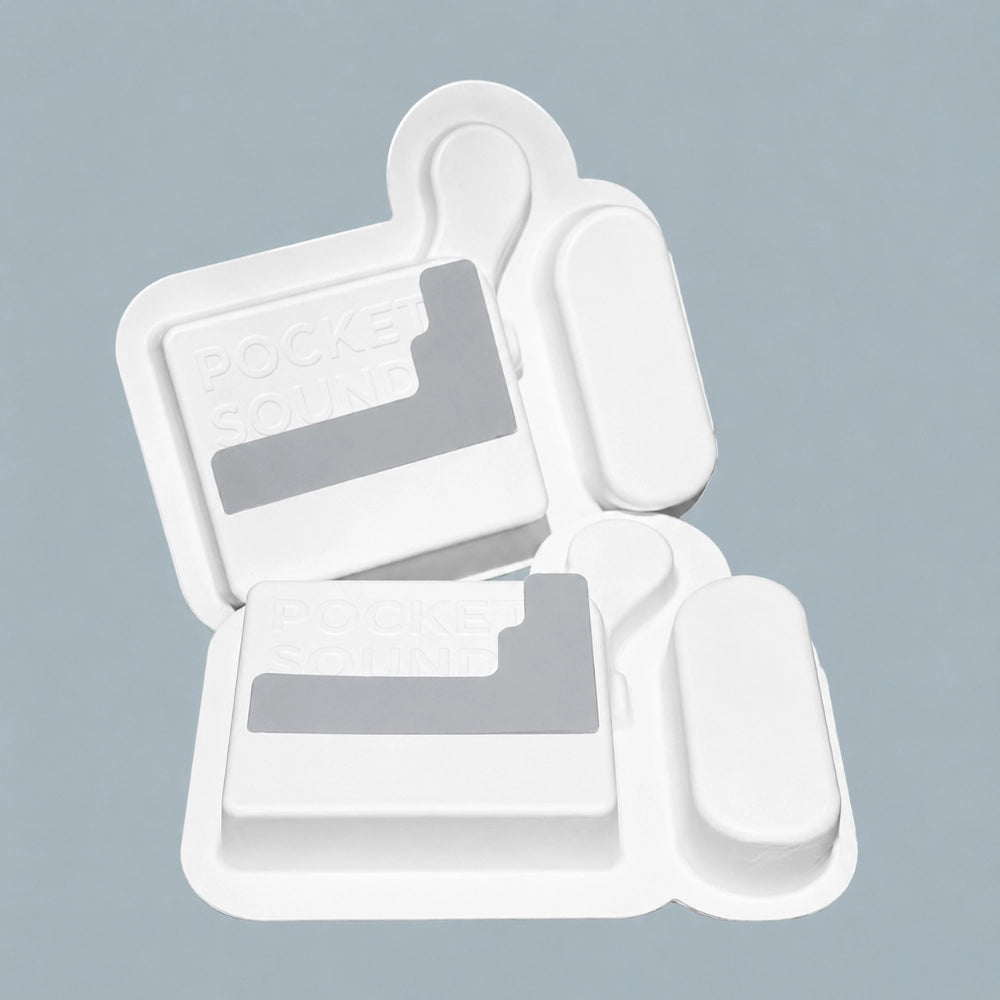
A Two-Tier Tray Split by Function
The tray opens into a lower deck cradling the speaker in a fitted cutout, with a coiled charging cable resting in its own channel alongside it. Above, a second tier holds a manual slot and a rounded pocket sized for extras. Each compartment is pressed to its own shape rather than a single flat well, so the cable can't slide across and scuff the speaker's fabric face.
Speaker Sits Raised on a Molded Ledge
A stepped edge lifts the speaker slightly off the tray floor, keeping the fabric grille from pressing flat against the fiber during transit. The cutout follows the unit's rounded corners closely enough to stop it shifting side to side, while still leaving enough clearance to lift the speaker out with two fingers rather than tipping the whole tray.
Uncoated Pulp Ready for Recycling
Skipping foam and plastic film entirely, the tray relies on the pulp's own rigidity to hold an electronic unit in place, something this breathable structure handles well since speakers generate no moisture concerns during shipping. Once removed from the box, the tray recycles or composts alongside standard paper waste.
What We Mainly Make?
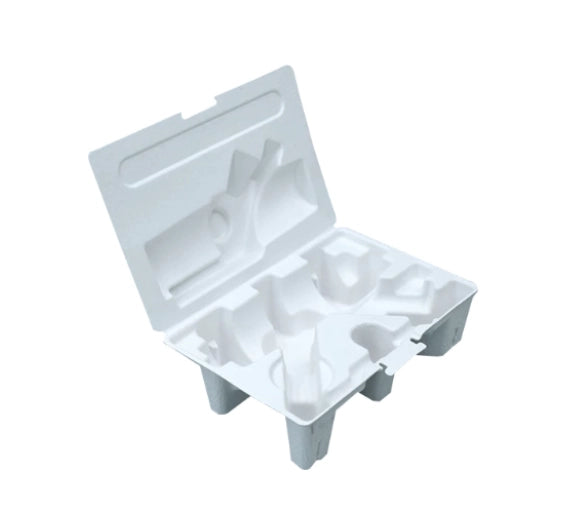
Eco Friendly Electronics Packaging
Molded pulp outer boxes and shock-absorbing inserts. A full-fiber kitting solution engineered to protect delicate gadgets with high-performance aesthetics.
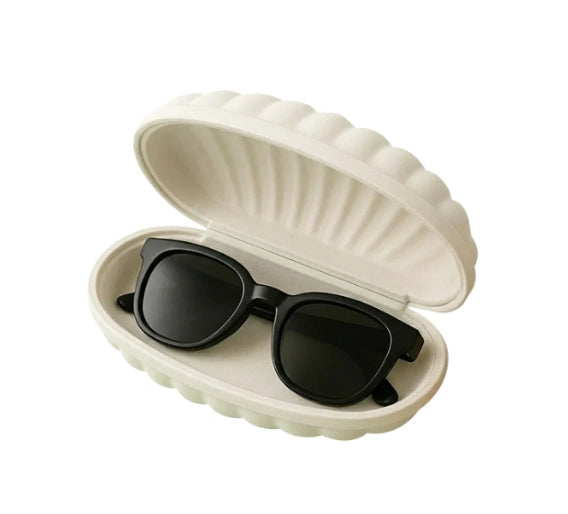
Eco Glasses Case
Durable molded pulp cases featuring soft-touch interiors. Precision-fit shells designed for eyewear protection, showcasing a minimalist and sustainable style.
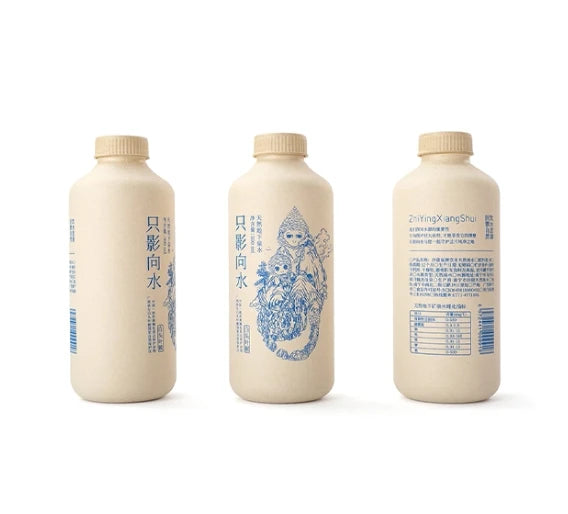
Eco Friendly Houseware Packaging
Protective molded pulp tray and sturdy outer casings. Tailored for home essentials, ensuring superior structural integrity and eco-friendly brand positioning.
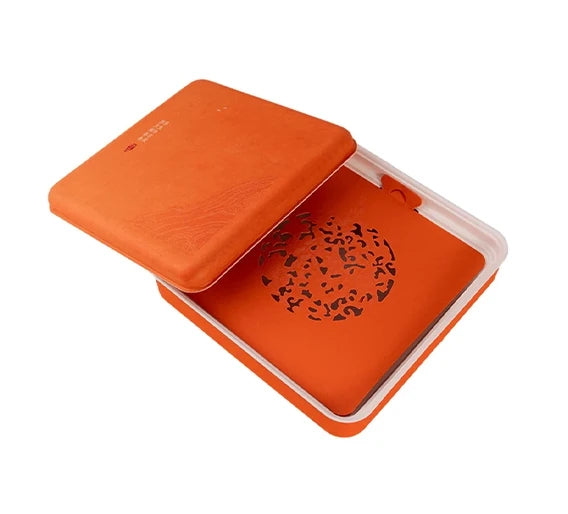
Eco Friendly Gift Packaging
Premium lid-and-base molded pulp boxes with bespoke pulp inserts. Sophisticated, sustainable kitting designed to deliver a high-end and memorable unboxing experience.
Customizable Process

From Product to Soil in 180 Days

Original product

Surface breakdown begins

Structural fragmentation

Microbial decomposition

Returned to soil
 Public Mould
 Packaging Solutions
 3D Design
 Customized Mould


Two-Tier Speaker Cable Insert Tray Packaging Wholesale
Two-Tier Speaker Cable Insert Tray Packaging Wholesale
You May Also Like
A Two-Tier Tray Split by Function
The tray opens into a lower deck cradling the speaker in a fitted cutout, with a coiled charging cable resting in its own channel alongside it. Above, a second tier holds a manual slot and a rounded pocket sized for extras. Each compartment is pressed to its own shape rather than a single flat well, so the cable can't slide across and scuff the speaker's fabric face.
Speaker Sits Raised on a Molded Ledge
A stepped edge lifts the speaker slightly off the tray floor, keeping the fabric grille from pressing flat against the fiber during transit. The cutout follows the unit's rounded corners closely enough to stop it shifting side to side, while still leaving enough clearance to lift the speaker out with two fingers rather than tipping the whole tray.
Uncoated Pulp Ready for Recycling
Skipping foam and plastic film entirely, the tray relies on the pulp's own rigidity to hold an electronic unit in place, something this breathable structure handles well since speakers generate no moisture concerns during shipping. Once removed from the box, the tray recycles or composts alongside standard paper waste.
What We Mainly Make?
Eco Friendly Electronics Packaging
Molded pulp outer boxes and shock-absorbing inserts. A full-fiber kitting solution engineered to protect delicate gadgets with high-performance aesthetics.
Eco Glasses Case
Durable molded pulp cases featuring soft-touch interiors. Precision-fit shells designed for eyewear protection, showcasing a minimalist and sustainable style.
Eco Friendly Houseware Packaging
Protective molded pulp tray and sturdy outer casings. Tailored for home essentials, ensuring superior structural integrity and eco-friendly brand positioning.
Eco Friendly Gift Packaging
Premium lid-and-base molded pulp boxes with bespoke pulp inserts. Sophisticated, sustainable kitting designed to deliver a high-end and memorable unboxing experience.
Customizable Process
From Product to Soil in 180 Days
Original product
Surface breakdown begins
Structural fragmentation
Microbial decomposition
Returned to soil