


Sustainable pet food packaging becomes a baseline expectation rather than a marketing bonus, pet food and treat brands are under growing pressure to rethink the bags, boxes, and trays their products ship in.
This shift isn't just a trend story. The global pet food packaging market is on a steady upward path, and within that market, eco-friendly formats are growing fastest. Paper and paperboard packaging already commands the largest material share in the category, a position driven directly by consumer demand for recyclable and biodegradable alternatives. At the same time, industry data shows eco-friendly packaging accounted for roughly a fifth of all new pet food packaging launches in the past year, signaling that sustainability has moved from niche to mainstream in product development pipelines.
For brands evaluating a packaging redesign, the question isn't whether to go sustainable — it's which sustainable format actually fits the product.
Why Sustainable Pet Food Packaging Matters Now
Three forces are converging on pet food brands at once:
- Regulatory pressure. Regions including the EU are tightening packaging waste rules, pushing manufacturers toward recyclable mono-materials and reduced plastic content well ahead of mandatory deadlines.
- Consumer willingness to pay. Pet owners increasingly treat their animals as family members, and that humanization extends to expecting the same environmental standards from pet food packaging that they expect from their own food and personal care products.
- E-commerce growth. As more pet food moves to subscription and direct-to-consumer channels, packaging has to perform two jobs at once — protect the product through shipping and reinforce the brand's sustainability story the moment the box is opened.
Material Options Compared
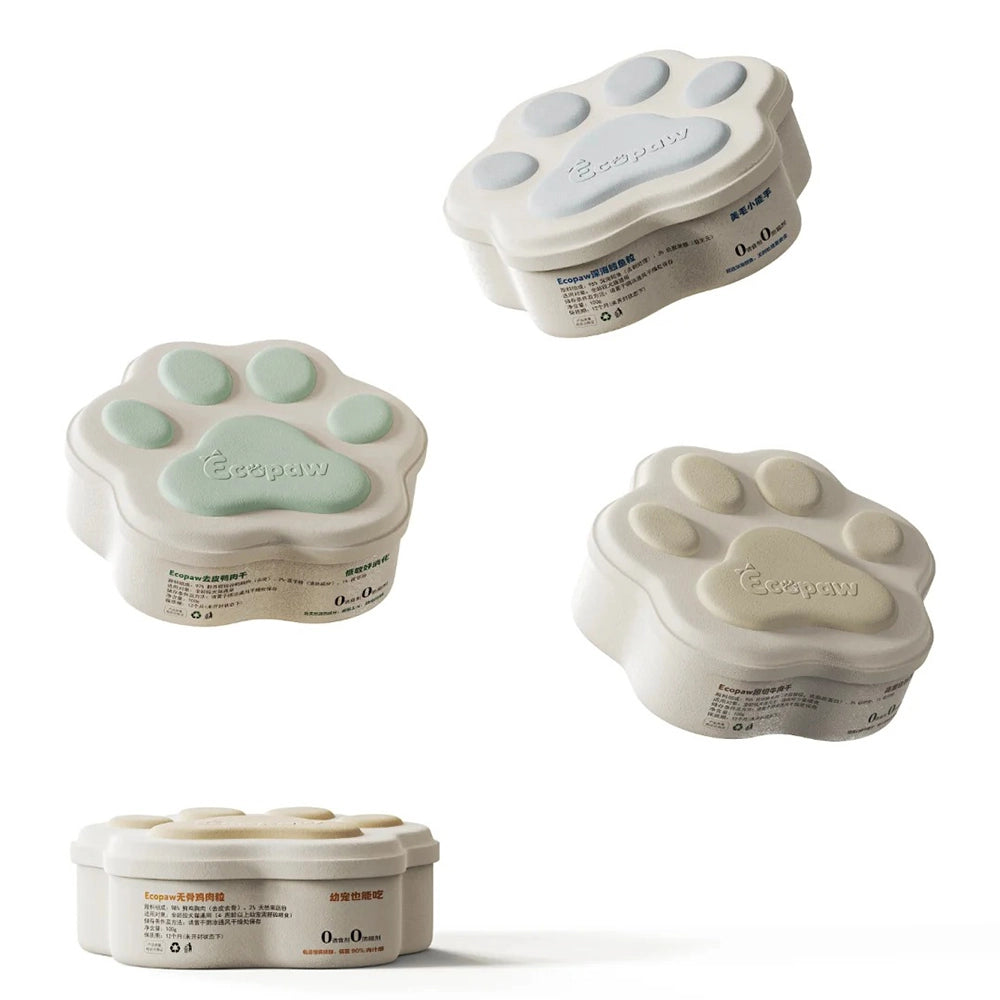
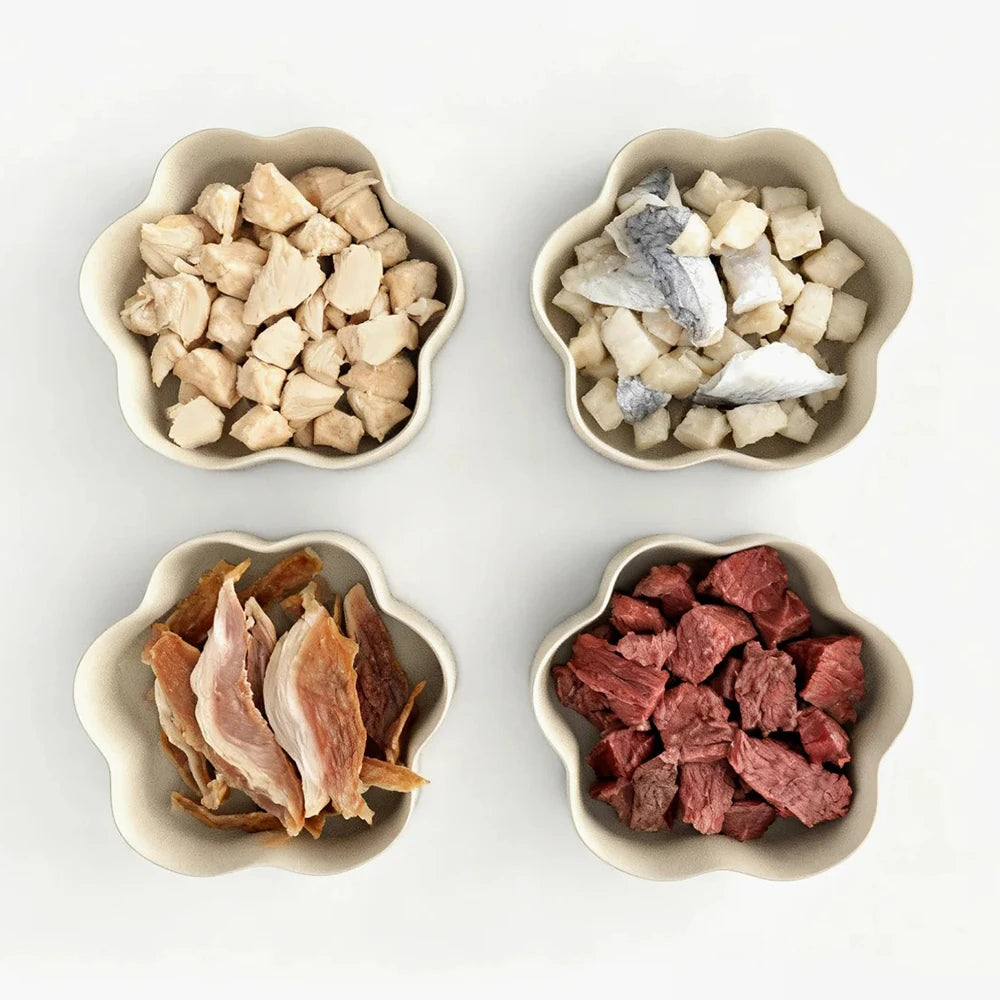
Molded pulp and paperboard. Made from recycled fiber, molded pulp is biodegradable, compostable in most cases, and increasingly used for trays, inserts, and rigid outer packaging for treats and supplements. It offers strong shock protection for shipping while keeping a tactile, premium unboxing feel that resonates with eco-conscious buyers.
Recyclable mono-material pouches. For dry food and treats that still need flexible packaging, mono-polyethylene or mono-PP pouches are replacing traditional multi-layer laminates. Because they use a single polymer type, they're far easier to recycle through existing plastic streams, without sacrificing barrier protection against moisture and oxygen.

Compostable films. Plant-based compostable films are gaining ground for treat pouches and sample sachets, particularly with brands targeting certified-organic or "human-grade" positioning. The tradeoff is usually cost and barrier performance, so they tend to suit lower-shelf-life products best.

Recycled and lightweighted rigid containers. For wet food tubs, supplement jars, and powder canisters, increasing post-consumer recycled (PCR) content and reducing material weight are the two most common — and most cost-effective — first steps toward a lower environmental footprint.

Data Behind the Shift
The numbers back up what's happening on shelf. The global sustainable pet food packaging market is on track to pass roughly USD 12 billion in 2026 and continue growing at a mid-single-digit compound annual rate through the early 2030s, according to Global Market Insights. Within that market, paper and paperboard already hold the largest material share by category and are forecast to post the fastest growth rate of any material type, a shift Grand View Research attributes directly to consumer demand for recyclable, easily-degradable formats. SNS Insider's 2025 data goes further, estimating that eco-friendly packaging accounted for roughly a fifth of all new pet food packaging launches that year, with the biodegradable material segment projected to expand faster than any other material category through 2033.
Regional data tells a similar story. Intel Market Research notes that recyclable mono-material adoption is accelerating fastest in North America, where major brands are shifting toward post-consumer recycled content in both rigid containers and flexible pouches — even though biodegradable materials still carry a 25–30% cost premium over conventional plastic, a gap manufacturers expect to narrow as production scales.
Brand Examples Worth Watching
A few packaging suppliers serving the pet food sector illustrate where the category is headed:
Amcor has been expanding its recyclable flexible packaging line for premium pet food brands, pairing mono-material structures with the high-barrier performance that wet and fresh pet food formats require.

Mondi added to its sustainable pre-made bag portfolio with a recyclable, mono-polyethylene-based line built for sealability and puncture resistance — properties particularly relevant for dry food and large-format bags that go through rough handling in shipping.

ProAmpac launched a sustainability platform committing its packaging portfolio to circular, recyclable structures, with pet food named as one of the categories driving adoption.

These examples point to a broader pattern: suppliers across the industry are converging on mono-material recyclability and recycled content as the practical, scalable path to sustainability — rather than waiting for niche compostable materials to become cost-competitive at volume.
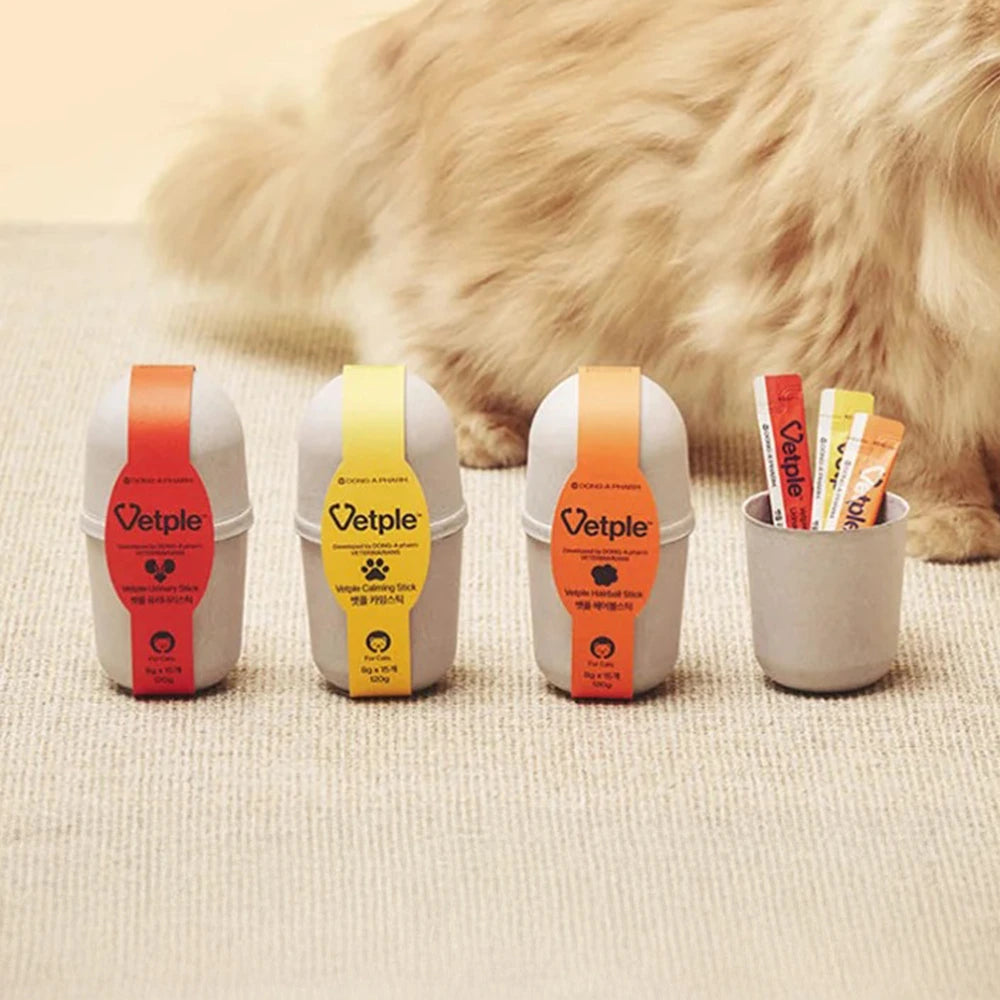
That said, flexible pouches are only half the picture. Amcor, Mondi, and ProAmpac's innovations mostly target high-volume dry and wet food bags — but treats, supplements, and canned food call for a different kind of packaging altogether, one where the box itself becomes part of the unboxing experience. This is where molded pulp packaging is carving out its own space in the category: rigid, shelf-stable, and shaped to the product rather than just wrapped around it. A paw-shaped tray for canned cat food, a flip-top box with a built-in carry handle, or a cocoon-shaped lid-and-base case for cat treats and supplements all do something a plastic pouch can't — they turn sustainability into a tactile, visual cue right on the shelf, while still being fully biodegradable and compostable.
For brands whose products are sold in boxes rather than bags, this structural, shape-driven approach to molded pulp is often the more natural fit than adapting a flexible-pouch supplier's standard formats.
What to Prioritize When Switching
- Match the material to the product's shelf-life needs first. A high-moisture wet food has very different barrier requirements than a freeze-dried treat — sustainability gains mean nothing if the product spoils faster.
- Check your MOQ before committing to a custom mold or film. Molded pulp trays and custom-printed mono-material pouches typically require a minimum order quantity, so it pays to confirm production minimums early in the design process.
- Design for the recycling stream that actually exists in your target market. "Recyclable" claims only hold up if local infrastructure can actually process the material — this matters especially for brands selling across multiple regions.
- Don't sacrifice shelf appeal for sustainability. Premium finishes — embossing, soft-touch coatings, spot UV — are achievable on recycled and molded pulp substrates, so brands don't have to choose between a "natural" look and a polished one.
How Otarapack Supports Sustainable Pet Food Packaging
Otarapack specializes in shape-molded pulp packaging for pet food, treats, and supplements — including paw-shaped trays for canned food, flip-top boxes with integrated carry handles, and cocoon-shaped lid-and-base cases with sleeve options for treats and supplements. Each design is engineered for shelf impact and structural protection, not just sustainability on paper: the molded fiber is fully biodegradable and compostable, while still holding its shape through shipping and retail handling. Our team handles custom mold development, structural design, and small-to-mid-volume production for brands moving away from conventional plastic boxes and clamshells.
Browse our full range of sustainable pet food packaging formats, or reach out for a sample pack and MOQ quote tailored to your product line.
Sources: Global Market Insights, Grand View Research, SNS Insider, Intel Market Research — pet food packaging industry reports, 2026.


